
Kevin Zhang is a passionate table tennis coach and the founder of RecRoomPick.com, a site dedicated to helping players and enthusiasts discover the best in indoor games. With years of competitive ping pong experience, Kevin shares expert tips, equipment reviews, and guides on table tennis, foosball, pool, pickleball, darts, and more. His mission is to make indoor recreation fun, accessible, and competitive for everyone.

 Last updated: November 03, 2025
Chess is a difficult game, but it is also very fulfilling the more you get better at it. Though as easy as it is to apprise yourself with the names and abilities of all the pieces on the board, you might still find that you have a long way to go when certain terms that are directed your way make no sense. There is little need to panic; this is a phase every beginner at chess goes through.
Many chess terms have been determined to describe certain conditions within the game without the need for elaborate explanations and definitions. To further progress in your understanding of chess, you would need to study and understand the implications of these terms because as you approach the professional level, they would become common parlance. Below is a compilation of the most important chess terms and what they mean.
The rules of chess are universal for all players and all boards. All players from, beginners to grandmaster (one of the terms you are to know), abide by the rules, and though the sizes of chess boards might vary, they all have the same pieces on them.
That said, the boards might vary in sophistication, with even the best travel chess sets being much simpler in design compared to the best chess boards available. A well-recommended board is this Classic Game Collection Metal Chess Set.
In understanding the terminology, moving the pieces around while learning some of the practical ones could help a player visualize what certain descriptions mean.
 Action chess is a game style where each player has a total of 30 minutes to make all of his/her moves.
 This is a method of describing moves on the chessboard using the name of the piece as well as the rank and file occupied on the board.
An amateur in chess refers to a non-master caliber player. The classification between masters and amateurs could be used to determine eligibility for certain competitions.
 This is a situation in a game where a player moves a piece to a square to capture an opponent’s piece.
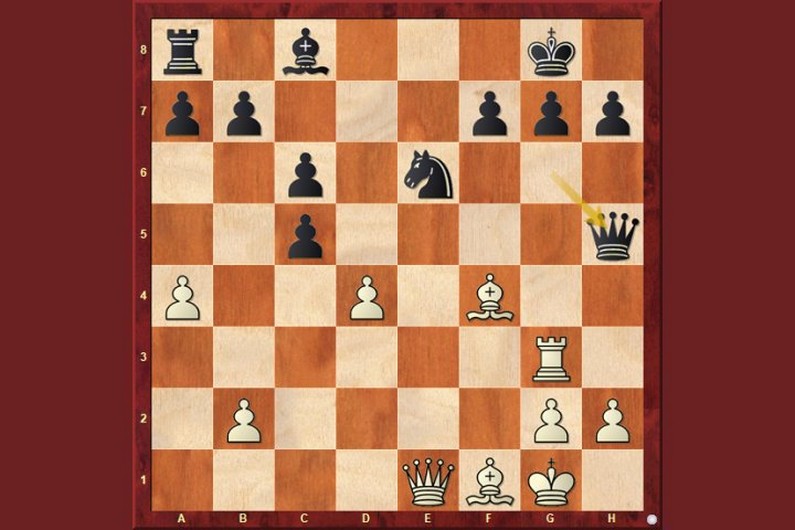 This refers to the rank on the board where a player positions his/her major pieces. The rank would be 1 for one player (white on a conventional board) and 8 for the other (black on conventional boards).
 A back rank mate refers to a checkmate on either 1 or 8 with a rook or queen.
 This is a situation where a player lines up two pieces that move in a similar manner, such as a bishop and queen.
This term refers to quick/fast chess games. Here, each player is required to make all of his moves with a limited time (usually five minutes).
A book or a book move is a move that a player learns to play, from text or videos, in certain situations.
 This is a bad move or one that changes the outlook of a game for one player, from positive to negative.
 This is a popular variant in chess where games are played on two chessboards by four players in teams of two. Here, the pieces captured by one player are passed on to the teammate, who can introduce said pieces to their board.
 This is a situation in a tournament when an odd player sits out a round (usually the first round).
 This is the process of taking an opponent’s piece as a result of a legal move.
 This was the old name use in referring to the rook, a piece capable of full vertical and horizontal movement but no diagonal movement.
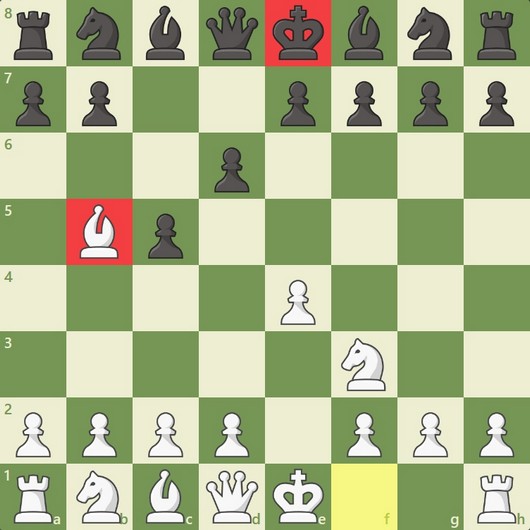 This is an attack that puts an opponent’s king under the threat of capture. The capture can be prevented.
 This is a condition in chess where a player’s king is in check, and there’s no way to prevent the capture.
This is an acronym that stands for Club Tournament Director.
 This is a tactic in chess where a piece that is in a perilous position is used to capture an enemy piece before it is itself captured.
 This is a condition in chess where the movement of one piece reveals the attack of another.
A double attack refers to a condition where a single move is used to launch an attack on two pieces simultaneously.
 This is a situation where there are two pawns of the same color on the same file.
 A doubled rook is a situation where a player forms a battery with two rooks on the same rank or file.
This refers to any game that ends without a winner.
 This is a special pawn capture move that is used immediately after the pawn under attack moves two squares from its original starting square.
 This is a condition where a piece that can be captured is not guarded.
 This is the ending phase of a game where there are few pieces left on the board, and the king, previously protected, comes out to fight.
This is a chess title awarded to players with ratings of 2000 to 2199 by the United States Chess Federation (USCF).
 An exchange occurs when players exchange pieces with an opponent in a series of moves, whether related or unrelated.
 This is a pattern of play where a bishop is developed or moved into the adjacent B or G file when the pawn above the knight is moved.
This is a French acronym that represents the International Chess Federation.
This is an official chess title and the third highest that can be received from the International Chess Federation.
 This is a rule that allows a player to lay a claim for a draw if no capture has been made and no pawn has been moved during the last fifty moves.
 Files are vertical rows on a chessboard. They are labeled a-h from bottom to top.
This is a type of chess game where each player has a total time of five minutes to make all his/her moves.
This happens when a player’s side of the time finishes, and the player loses or draws because he ran out of time.
 This is a two-move checkmate that can be delivered by the black.
This is defeat in a chess game due to a player being absent or running out of time.
 A fork is a move that involves using one piece, usually a knight or pawn, to simultaneously attack two or more pieces.
This is the highest chess title that can be awarded by the International Chess Federation to a player.
An illegal move is any move performed by a player that shouldn’t be possible and isn’t allowed by the rules of the game.
This is a title awarded by the International Chess Federation to chess players who are strong but below the level of grandmaster.
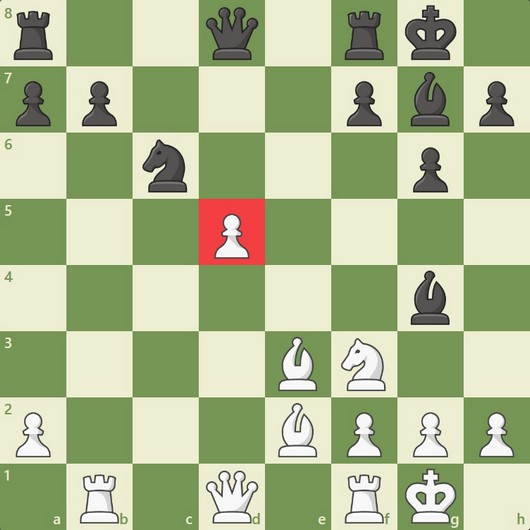 Isolated pawns are pawns on a chessboard that do not possess any friendly pawns on adjacent files.
 The knight is a chess piece, represented by the head and neck of a horse, which moves in an L shape.
This is an acronym in chess that represents the Local Tournament Director.
This is a title that is awarded by the United States Chess Federation to players that are or had once been rated over 2200.
This is a term used to describe the value of pieces on the board for a player relative to another in terms of advantageous or disadvantageous.
This is an acronym in chess that represents National Tournament Director.
 An open file on a chessboard has no pawns of either color on it.
Patzer, a German word meaning bungler, is used to describe a player that is considered poor or inept at chess.
 A piece is a term used to describe the characters or “chessmen” on a chessboard.
A pin is a tactic in chess where an attacking piece restricts the movement of a defending piece as such a move would expose a more valuable piece to capture.
This refers to a single turn taken by one of the players in two-player sequential games. Thus, a move consists of two plies.
This happens when a pawn reaches the back rank of an opponent and is promoted to a major piece.
Ranks are the horizontal rows on a chessboard. They are labeled 1-8 on the board.
Ratings are a means of estimating the skill of a chess player based on their performances in tournaments and against other players.
Repetition is a situation in a game of chess wherein a player can claim a draw if a position arises three times within the same game.
This happens when a player ends a game by intentionally turning down the king during a game or uttering the words “I resign.”
This is a format in competitions and tournaments where all players in the same section of the tournament play one another.
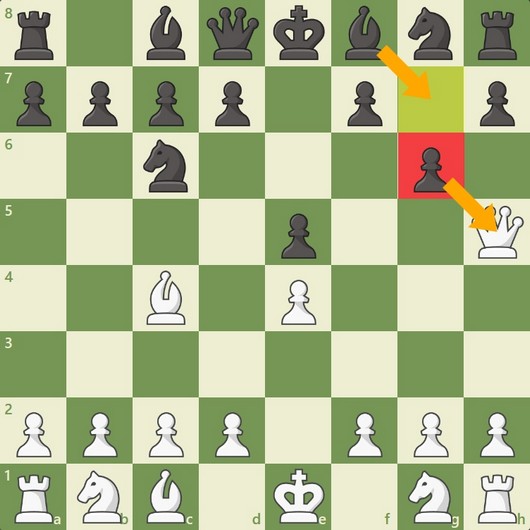 Scholar’s mate is a four-move checkmate in chess that is common among beginners but is considered to be detrimental to the development of players.
This is a division or part of a tournament where players play only others in their section.
A semi-open file is a file on a chessboard with a single pawn, of an opponent’s color, in it.
This is a title in chess awarded by the United States Chess Federation to any player who attains a rating of 2400.
 A skewer is an attack in chess that is similar to the pin. Here, the attack is on two pieces in a line, and the opponent would need to move the more valuable piece leaving the less valuable one to capture.
This is a casual game of chess that is played without a clock.
This is a type of draw in chess where a player isn’t in check, but none of the pieces on the board can make legal moves.
This was a principle-based on-time control, which requires a game to be completed within a certain amount of time.
 The Swiss system used in tournaments involves pairing players with others who perform as well or as poorly as themselves after an initially random or rating pairing.
This is an acronym in chess that represents the Tournament director.
A tactic in chess can be described as a series of moves and combinations (involving attacks, checks, safeguarding pieces, etc.) designed to limit the choices of an opponent and gain an edge for a player.
Team tournaments in chess involve teams squaring up against one another.
In chess, the term tempo most accurately describes the time taken or turns used to develop a tactic or strategy by a player.
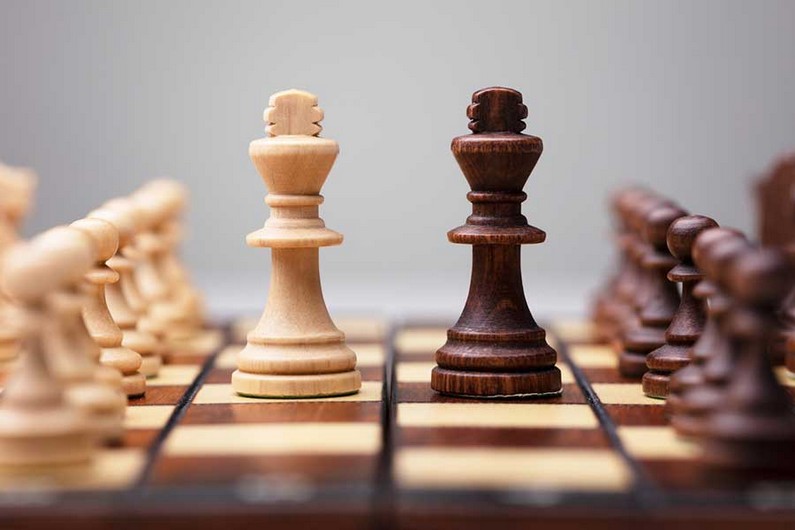 A threat is a move that could result in the capture of a piece, a potential checkmate, or further progression of s strategy if not prevented by an opponent.
A time delay is an amount of time, usually in seconds, that is set to count after every turn before the next player’s time starts to count again.
 This is a rule which proposes that when a player intentionally touches any of the pieces on the board when it is their turn to move, they must move that piece or capture it, provided it is legal to do so.
When a player is said to be unrated, such a player has never played a rated game, or his/her rating has not been made official yet.
This is an acronym in chess that represents the United States Chess Federation
Just like a patzer, a woodpusher refers to a player who is not good at the game of chess.
 This is a situation in chess, and other turn-based games wherein a player with no unfavorable moves to make is still obligated to take their turn, thus, making their position in the game worse.
This is an innovative move where a player delays playing an expected move by initially posing an immediate threat with another piece that must be dealt with or prevented first by an opponent.
If you are at this point, you should have a basic understanding of many of these terms, and if you moved your pieces around the board as you learned them, their general implications on the game of chess should be settling in.
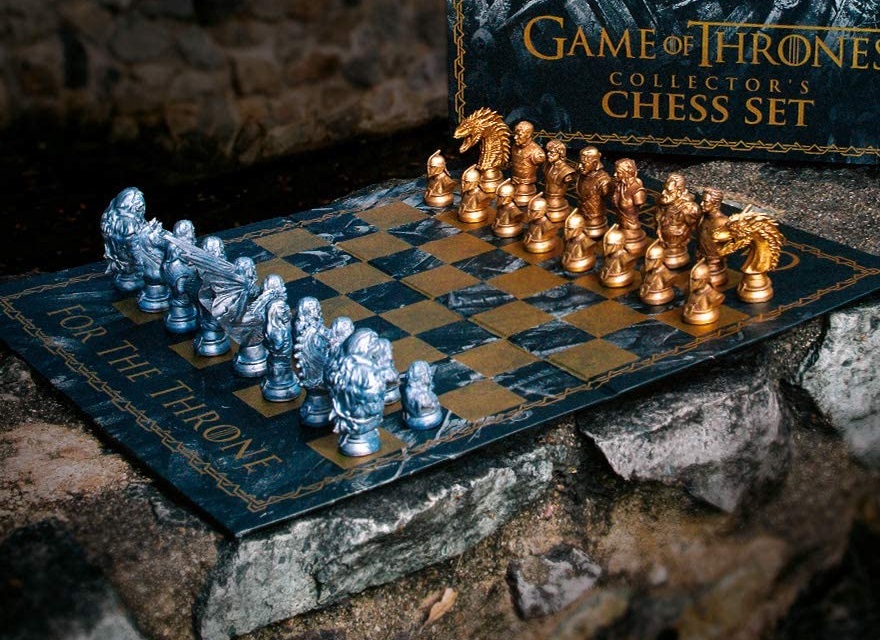
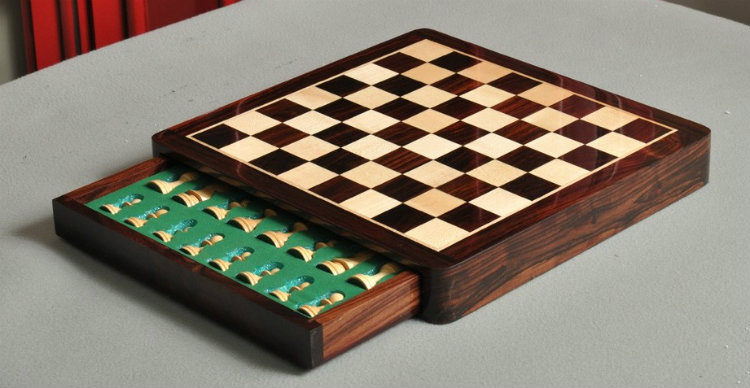
The next step should be learning strategies and acquiring a personal board to practice with friends. You could go for a durable, USCF-endorsed board such as the House of Staunton Quiver Chess Set. However, if you have a taste for exquisitely finished themed boards that bring more class, there is this Dragon Chess Set for you.
Whichever board you settle for, the key to progress is to keep learning and thinking about the game. Keep cultivating your strategies and planning; you might just be of the right mindset to play professionally.