
Kevin Zhang is a passionate table tennis coach and the founder of RecRoomPick.com, a site dedicated to helping players and enthusiasts discover the best in indoor games. With years of competitive ping pong experience, Kevin shares expert tips, equipment reviews, and guides on table tennis, foosball, pool, pickleball, darts, and more. His mission is to make indoor recreation fun, accessible, and competitive for everyone.

 Last updated: November 09, 2026
Last updated: November 9, 2026. Rules and figures were checked against the International Padel Federation (FIP), USA Pickleball and the Sports & Fitness Industry Association (SFIA) on this date. Recroompick earns a commission on qualifying purchases through the links on this page, at no extra cost to you.
Quick answer: No, padel and pickleball are not the same sport. Padel is played almost always as doubles on a 20 x 10 m court enclosed by glass and mesh walls that are part of play, with a perforated, stringless racket, a pressurized ball similar to a tennis ball and tennis scoring. Pickleball is played as singles or doubles on an open 20 x 44 ft court, about the size of a badminton doubles court, with a solid paddle, a light plastic ball with holes, a 7 ft no-volley “kitchen” and games to 11. Both use an underhand serve. In the US, pickleball is far bigger: about 24.3 million players in 2025 versus about 1.07 million for padel (SFIA). In our editorial view, pickleball is quicker to learn, while padel suits players who enjoy longer rallies and tennis-style play.
Padel and pickleball are the two racket sports most often mentioned alongside tennis right now, and their names are close enough that many people assume they are the same game. They are not. They grew up on different continents, use different courts and equipment, and reward different skills.
This guide compares the two side by side using the official rulebooks and the latest US participation data, so you can decide which one to try first and what gear you need.
| Padel | Pickleball | |
|---|---|---|
| Court | 20 x 10 m (about 66 x 33 ft), fully enclosed | 20 x 44 ft (about 6.1 x 13.4 m), open |
| Walls | Glass or solid walls plus metal mesh; the ball can be played off them | None |
| Net height | 0.88 m (34.6 in) at the center, 0.92 m at the posts | 34 in at the center, 36 in at the sidelines |
| Racket or paddle | Solid, stringless, perforated racket up to 45.5 cm long, 26 cm wide and 38 mm thick | Solid paddle; length plus width up to 24 in, length up to 17 in, no thickness limit |
| Ball | Pressurized rubber ball, 6.35 to 6.77 cm, 56 to 59.4 g | Hollow plastic ball with 26 to 40 holes, 2.87 to 2.97 in, 22.1 to 26.5 g |
| Serve | Underhand: bounce the ball, hit it at or below the waist, diagonally | Underhand, contact below the waist, diagonally |
| Special rule | Ball may rebound off the walls after it bounces | No volleys in the 7 ft non-volley zone (“kitchen”); two-bounce rule |
| Scoring | Tennis scoring; golden point or star point options at deuce | Games to 11, win by 2; traditionally only the serving side scores |
| Players | Almost always doubles | Singles or doubles |
| Origin | 1969, Acapulco, Mexico | 1965, Bainbridge Island, Washington |
| US players (2025) | About 1.07 million | About 24.3 million |
Sources: FIP Rules of Padel, USA Pickleball and its 2025 rulebook, LTA Padel, SFIA 2026 participation data (full list in the Sources section).
No. The two sports share an underhand serve, a solid hitting surface instead of strings, and a social, doubles-friendly format, but almost everything else is different. Padel was invented in 1969 in Acapulco, Mexico, by Enrique Corcuera and spread to Spain and Argentina, where it is now mainstream. Pickleball was created in 1965 on Bainbridge Island, Washington, by Joel Pritchard, Bill Bell and Barney McCallum, using ping-pong paddles, a wiffle ball and a lowered badminton net.
The easiest way to tell them apart: if the court has glass walls and the players use thick rackets full of holes, it is padel. If the court is open and players use flat paddles and a plastic ball with holes, it is pickleball.
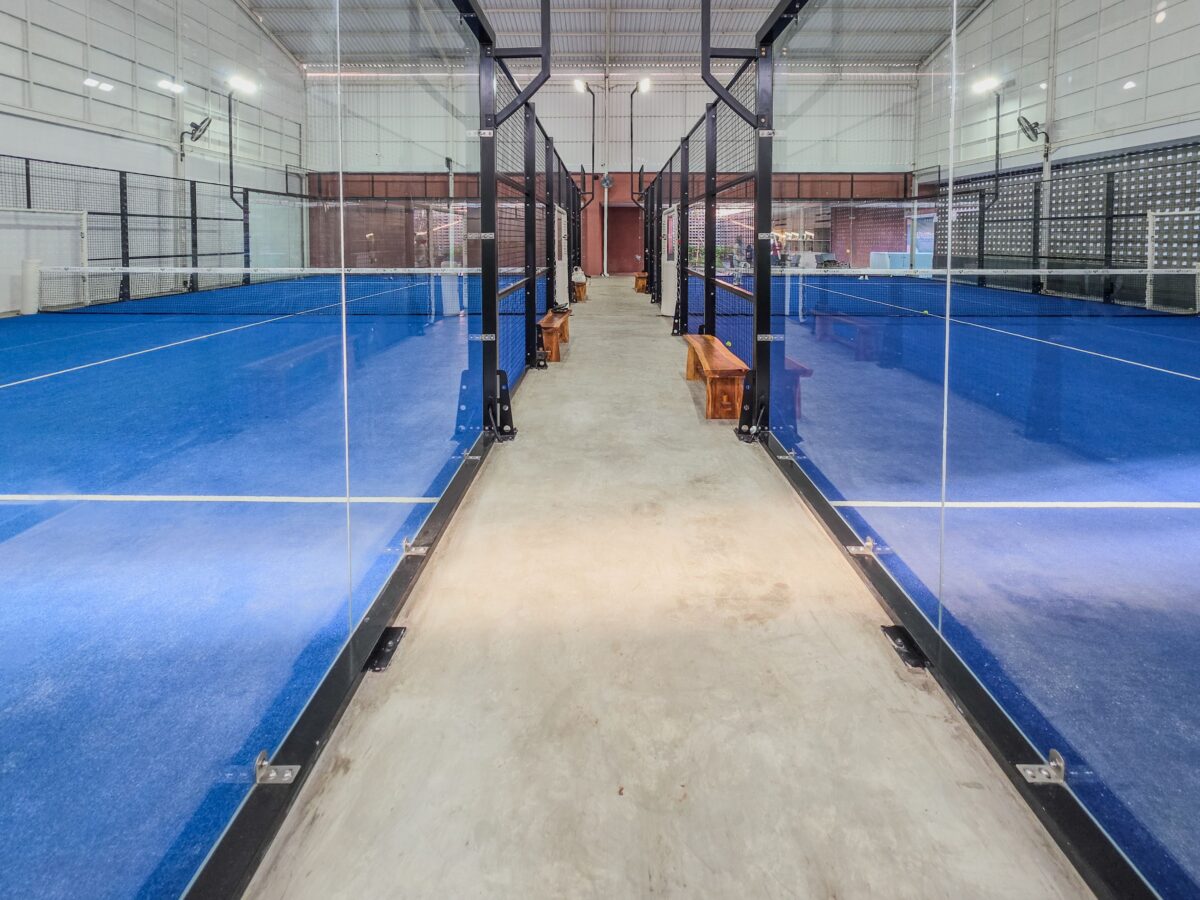
Padel courts are enclosed by glass and mesh walls that are part of play. Photo by N Sopyan on Pexels.
The court is the biggest visible difference. FIP rules set a padel court at 10 m wide by 20 m long, fully enclosed. The end walls are 4 m tall in total: the first 3 m is solid wall (often glass) and the top 1 m is metal mesh, and the sides combine wall sections with mesh. After the ball bounces on your side, you can still play it off the walls, much like squash.
A pickleball court is 20 ft wide by 44 ft long, the same footprint as a badminton doubles court, with no walls in play. A 7 ft non-volley zone, called the kitchen, sits on each side of the net, and players cannot volley while standing in it. The nets are surprisingly similar: a padel net is 0.88 m (about 34.6 in) high at the center, and a pickleball net is 34 in at the center and 36 in at the sidelines.
Because a pickleball court is small and has no walls, it can be painted onto existing tennis or multi-use courts. A padel court needs purpose-built glass walls and fencing, which is one reason padel courts are still rare in the US.
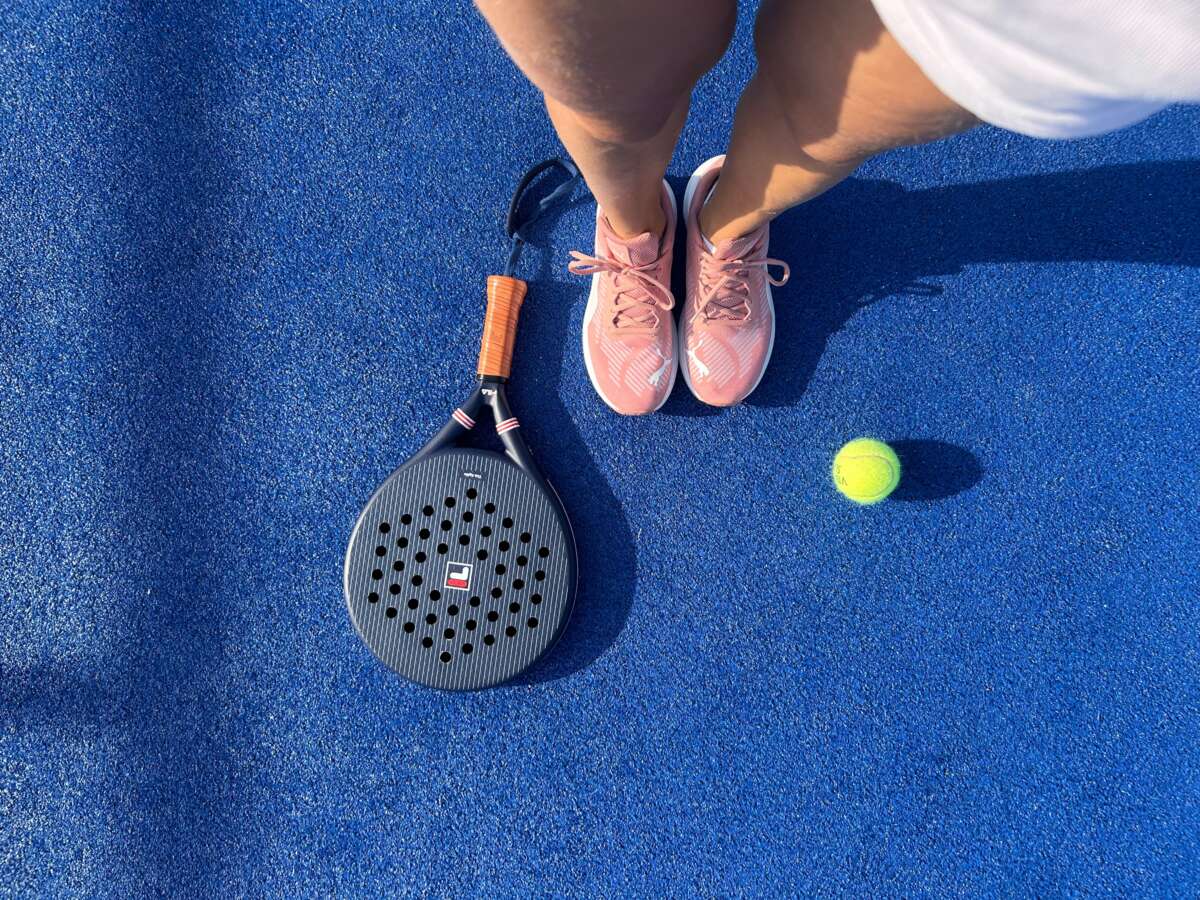
A padel racket is thicker, perforated and has a wrist strap; the ball looks like a tennis ball. Photo by Diana Scala on Pexels.
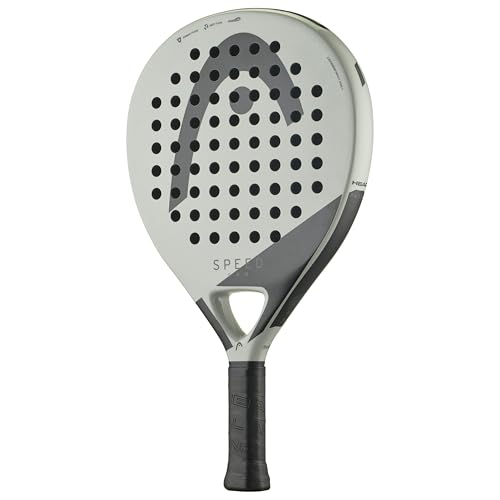
A padel racket is solid and stringless, with a foam core and a face drilled with holes. FIP rules cap it at 45.5 cm long, 26 cm wide and 38 mm thick, and it has a wrist strap. Beginner padel rackets we have researched weigh about 340 to 360 g (12 to 12.7 oz); for example, HEAD lists the HEAD Evo Speed 2025 at 350 g.
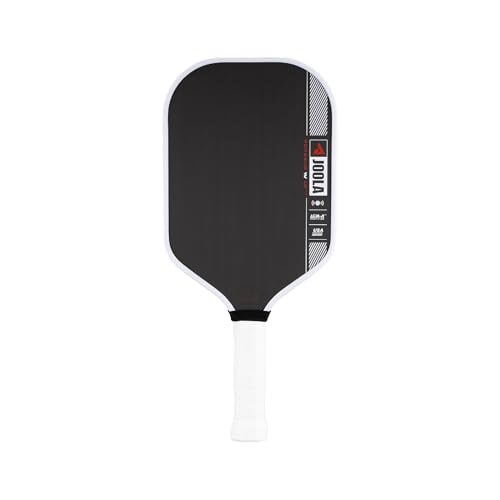
A pickleball paddle is flatter and lighter, with no holes. USA Pickleball rules limit its length plus width to 24 inches and its length to 17 inches, with no limit on thickness or weight. Most paddles in our best pickleball paddle guide weigh between about 7.5 and 8.6 oz (roughly 215 to 245 g), so a typical padel racket is about one and a half times as heavy.
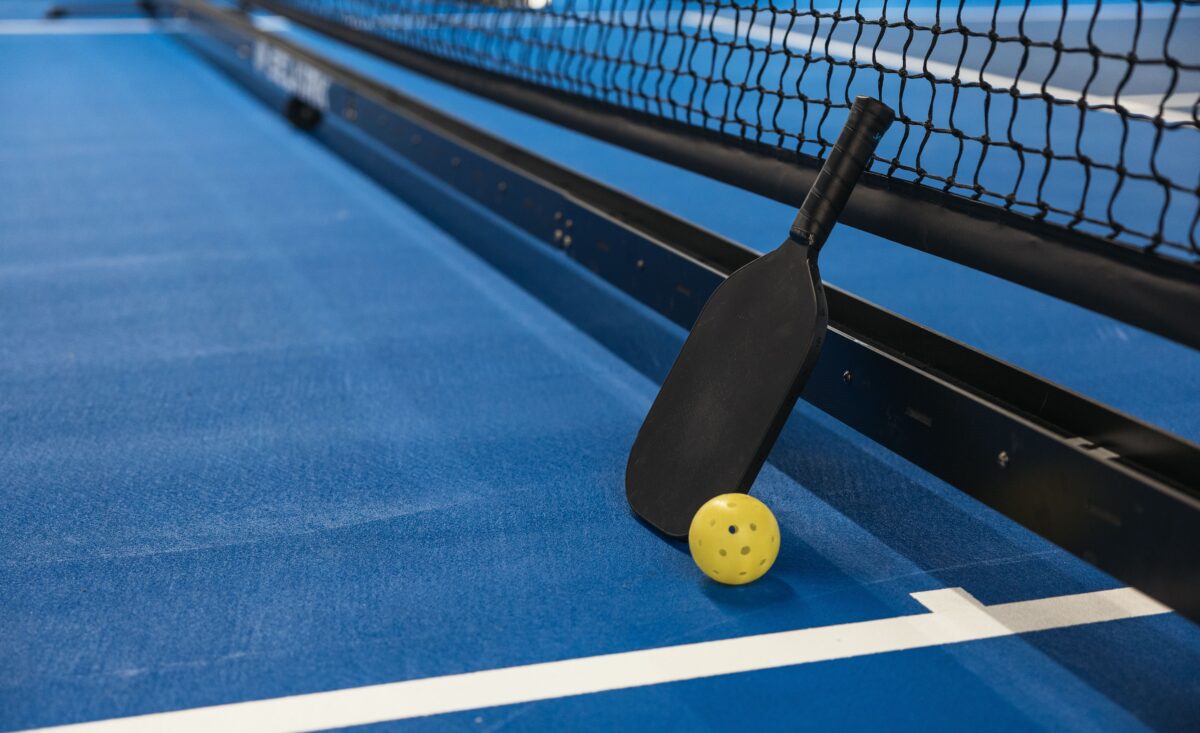
A pickleball paddle has a solid face and the ball is hollow plastic with holes. Photo by Mason Tuttle on Pexels.
A padel ball looks like a tennis ball. FIP rules specify a pressurized rubber ball 6.35 to 6.77 cm in diameter weighing 56 to 59.4 g. A pickleball is hollow plastic with 26 to 40 round holes, 2.87 to 2.97 in (7.3 to 7.5 cm) across and only 22.1 to 26.5 g, and indoor and outdoor balls are built differently (see our guide to indoor vs outdoor pickleballs). The heavier, livelier padel ball travels farther and keeps rallies going off the walls; the light pickleball slows down quickly, which favors soft shots near the net.
Our take: pickleball is usually quicker to pick up. The court is small, the paddle is light, the plastic ball is slow, and the basic rules fit on one page, so complete beginners can rally in their first session. Padel is also beginner-friendly, especially for anyone with a tennis or squash background, but learning to read balls off the glass takes more time, and the heavier racket and ball ask a little more of your arm.
If you want a sport that is easy on a wide range of ages and fitness levels, start with pickleball. If you already play tennis or love long rallies and a more athletic game, padel is worth a try. Many players enjoy both.
Pickleball is far more established in the US. According to the SFIA’s 2026 participation data, about 24.3 million Americans played pickleball in 2025, up 22.8% from 2024 and up 171.8% over three years. Padel was added to the SFIA survey for the first time in the same cycle, with about 1,073,000 US players in 2025, according to the United States Padel Association (USPA).
The USPA counted just over 1,000 padel courts open across 31 states as of April 2026 and projects 10,000 courts and more than 10 million players by 2030; treat that as an industry forecast, not a measurement. Worldwide the picture flips: the FIP reports more than 35 million padel players in over 150 countries, with Spain and Argentina among its strongholds, while pickleball’s core market is North America.
In practice, that means you can find pickleball courts at many public parks and recreation centers, while padel in the US is mostly played at dedicated clubs where you book a court.
Equipment is cheaper for pickleball. When we checked Amazon on November 8, 2026, a two-paddle starter set such as the Amazin’ Aces Classic Graphite set cost about $30, a lightweight carbon-face paddle such as the HEAD Extreme Tour about $50, and our top all-court pick, the JOOLA Ben Johns Hyperion Pro IV 16mm, about $150.
Beginner padel rackets cost more: the Babolat Contact was about $90 and the HEAD Evo Speed 2025 about $100. Court access also differs: padel usually means paying a club court fee, while many pickleball courts are free public courts. Prices change often, so check current prices before you buy.
For most beginners, padel takes a little longer to learn. Its court is larger, the racket and ball are heavier, and playing the ball off the glass walls is a new skill. Pickleball’s small court and slow plastic ball make the first rallies easier, although high-level pickleball is just as demanding in its own way.
No. A padel court is 20 x 10 m and fully enclosed by walls that are part of play, while a pickleball court is an open 20 x 44 ft court with a 7 ft non-volley zone on each side of the net. A padel court has about 2.4 times the area of a pickleball court, and you cannot play padel without its walls.
In the US it is called padel, and sometimes padel tennis. It is not the same as American paddle tennis or platform tennis, which are separate sports played without padel’s glass-walled court. The United States Padel Association and the International Padel Federation govern padel.
No. FIP rules require a perforated, stringless padel racket no longer than 45.5 cm and no thicker than 38 mm, with a wrist strap, and padel uses a pressurized ball more than twice as heavy as a pickleball. A pickleball paddle is too thin and light for that ball and is not legal in padel.
Pickleball started in the US in 1965 and needs only a small, open court that can be painted onto existing tennis or badminton courts, so it spread through parks and community centers. Padel needs purpose-built walled courts, and the US had just over 1,000 of them in April 2026. SFIA data shows about 24.3 million US pickleball players in 2025 versus about 1.07 million padel players.
Usually, yes. When we checked on November 8, 2026, a two-paddle pickleball starter set cost about $30, while beginner padel rackets cost about $90 to $110 each. Padel is also usually played at clubs that charge court fees, while many pickleball courts are free public courts.
No. Padel is played on an enclosed 20 x 10 m court with glass walls and a perforated racket. American paddle tennis (also called POP tennis) and platform tennis are different sports with their own courts and rules, even though people sometimes use “paddle” for all of them.
This comparison is based on the official FIP Rules of Padel, USA Pickleball’s website and 2025 rulebook, the LTA’s padel vs pickleball guide, and SFIA participation data as reported by Pickleball.com and the United States Padel Association. Equipment weights and prices come from the manufacturer specs and Amazon listings we verified for our pickleball paddle and padel racket guides on November 8, 2026. We did not play-test these sports for this article; the beginner recommendations are our editorial judgment based on the rules and equipment differences above.