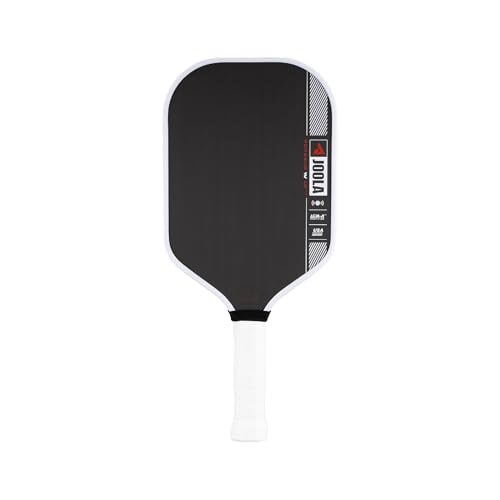

Kevin Zhang is a passionate table tennis coach and the founder of RecRoomPick.com, a site dedicated to helping players and enthusiasts discover the best in indoor games. With years of competitive ping pong experience, Kevin shares expert tips, equipment reviews, and guides on table tennis, foosball, pool, pickleball, darts, and more. His mission is to make indoor recreation fun, accessible, and competitive for everyone.

 Last updated: November 09, 2026
Last updated: November 9, 2026. Weight classes and customization advice were checked against USA Pickleball’s rulebook, Pickleball Central, Selkirk and Pickleball Warehouse on this date; paddle weights come from manufacturer specs we verified on November 8, 2026. Recroompick earns a commission on qualifying purchases through the links on this page, at no extra cost to you.
Quick answer: Most adult players use a pickleball paddle that weighs about 7.5 to 8.6 oz (213 to 244 g), and every paddle in our best pickleball paddle guide falls in that range. USA Pickleball sets no weight limit. Retailer Pickleball Central classifies 7.6 to 7.8 oz as lightweight, 7.9 to 8.2 oz as midweight and 8.3 oz or more as heavyweight. Lighter paddles are quicker at the net and easier on the arm; heavier paddles add power and stability but can feel slower. How heavy a paddle feels also depends on where its weight sits (swing weight), not only on the scale. In our editorial view, a midweight paddle of about 7.9 to 8.2 oz is the safest first choice for most players, and you can add lead or tungsten tape later in 1-gram steps.
Paddle weight is one of the few specs you can feel in the first rally. A difference of half an ounce changes how quickly you can react in a fast exchange at the kitchen line, how much pace you get on a drive, and how tired your arm feels after two hours of play.
This guide explains the weight classes, the difference between static weight, swing weight and twist weight, how to add weight with tape, and which weight suits which player, using published specs for the paddles we cover and guidance from USA Pickleball, retailers and manufacturers.
| Weight class | Ounces | Grams (approx.) | Typical strengths | Trade-offs |
|---|---|---|---|---|
| Lightweight | 7.6 to 7.8 oz | 215 to 221 g | Fast hands, easy to swing, less arm fatigue | Less power and stability against hard drives |
| Midweight | 7.9 to 8.2 oz | 224 to 232 g | Balance of maneuverability and power | A compromise, not the extreme of either |
| Heavyweight | 8.3 oz and up | 235 g and up | More power and plow-through, more stable on contact | Slower in quick exchanges; can tire the arm |
Weight classes from Pickleball Central’s paddle guide; other retailers draw the lines slightly differently, so treat them as ranges, not rules. Grams converted at 28.35 g per ounce.
| Paddle | Listed weight | Class | Core |
|---|---|---|---|
| HEAD Extreme Tour | 7.6 oz (215 g) | Lightweight | 11mm |
| Onix Z5 Graphite Mod | 7.5 to 8.2 oz | Light to midweight (varies by unit) | 12mm |
| Selkirk SLK Geo | 7.8 to 8.1 oz average | Light to midweight | 14mm |
| CRBN TruFoam Barrage | 7.9 oz average (plus or minus 0.2 oz) | Midweight | 14mm |
| JOOLA Ben Johns Hyperion Pro IV 16mm | 8.1 oz average | Midweight | 16mm |
| 11SIX24 Vapor Power 2 | 8.0 to 8.3 oz | Midweight to heavy | 16mm |
| Amazin’ Aces Classic Graphite set | 8.6 oz per paddle | Heavyweight | Polymer honeycomb |
Weights are manufacturer specs we verified for our best pickleball paddle and carbon fiber paddle guides on November 8, 2026. Individual paddles vary, which is why many brands list a range or an average.
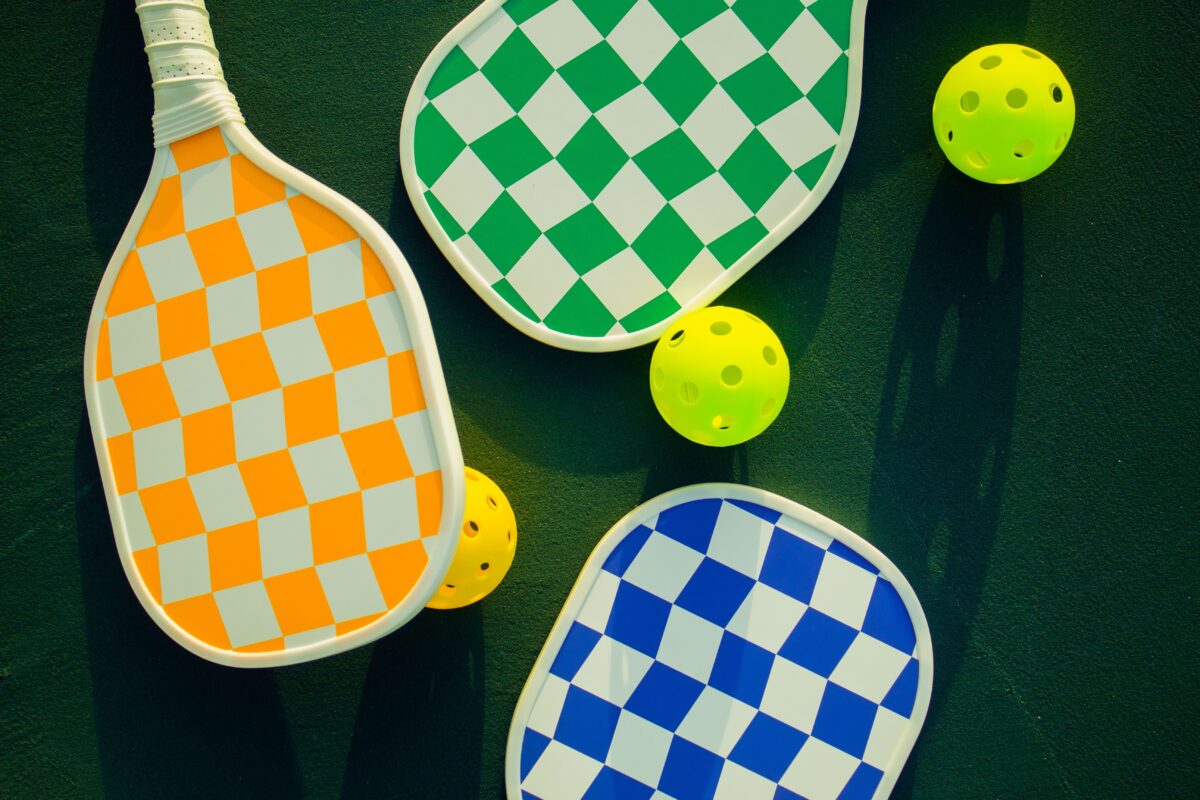
Paddles that look alike can differ by an ounce or more in weight. Photo by Lindsey Flynn on Pexels.
For most adults, between about 7.6 and 8.3 oz. That covers Pickleball Central’s lightweight and midweight classes and most of the performance paddles we have researched. There is no rule-based limit: USA Pickleball’s rulebook says there is no restriction on paddle weight, so the right number depends on your strength, your style and how your arm feels after playing.
Our take: if you are unsure, start in the middle, around 7.9 to 8.2 oz. It is easier to add a gram or two of tape to a paddle that feels slightly light than to make a heavy paddle lighter, because removing weight is not practical.
A lightweight paddle (about 7.6 to 7.8 oz by Pickleball Central’s definition) is easier to move quickly, which helps in fast hand battles at the net, on resets and on dinks. Pickleball Central describes the class as having “fantastic maneuverability” and being very easy to swing. Players who tire easily, play long sessions or prefer a touch game often like lighter paddles.
The trade-off is stability: a light paddle can be pushed around more by hard-hit balls and usually gives less free power on drives and serves. If you are shopping for the lightest paddle in our guides, the HEAD Extreme Tour is listed at 7.6 oz and cost around $50 when we checked on November 8, 2026; its 11mm core feels lively but is less forgiving than a 16mm core.
Midweight paddles (7.9 to 8.2 oz) are, in Pickleball Central’s words, a “common weight range for performance paddles” with a balance of mobility and power. Most of the paddles in our best pickleball paddle guide sit here, including our top all-court pick, the JOOLA Ben Johns Hyperion Pro IV 16mm at 8.1 oz average.
Heavy paddles (8.3 oz and up) put more mass behind the ball, which adds pace on drives and serves and keeps the paddle steadier when blocking hard shots. The cost is speed: a heavier paddle is slower to bring into position, and Pickleball Central warns that a paddle that is too heavy can contribute to arm problems such as “pickleball elbow.” Some budget sets sit at the heavy end; the Amazin’ Aces Classic Graphite set, for example, lists 8.6 oz per paddle.
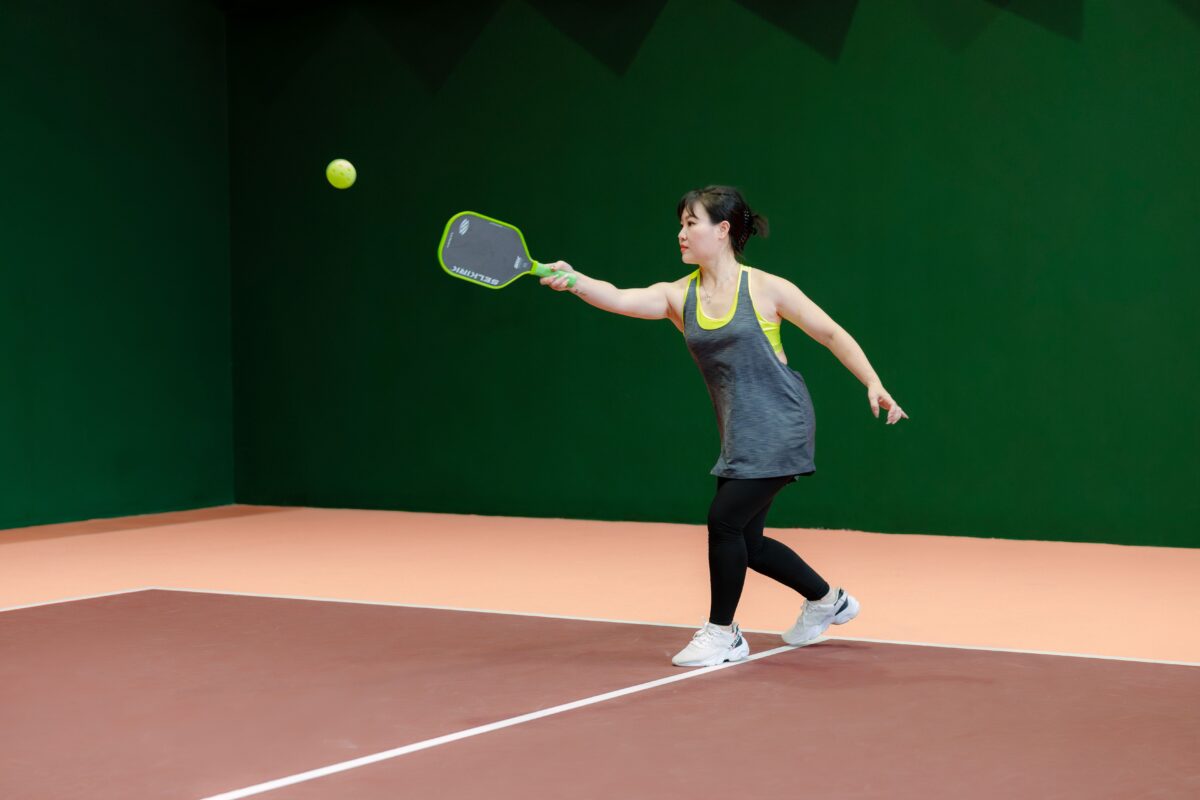
Swing weight is how heavy the paddle feels in motion, not on a scale. Photo by HONG SON on Pexels.
Independent tester Pickleball Effect measures swing weight and twist weight for each paddle on a Briffidi SW1 machine, and its paddle database is a useful place to compare those numbers between models. Brands rarely list them, so if you are choosing between two paddles of similar static weight, swing weight is the more useful number to look up.
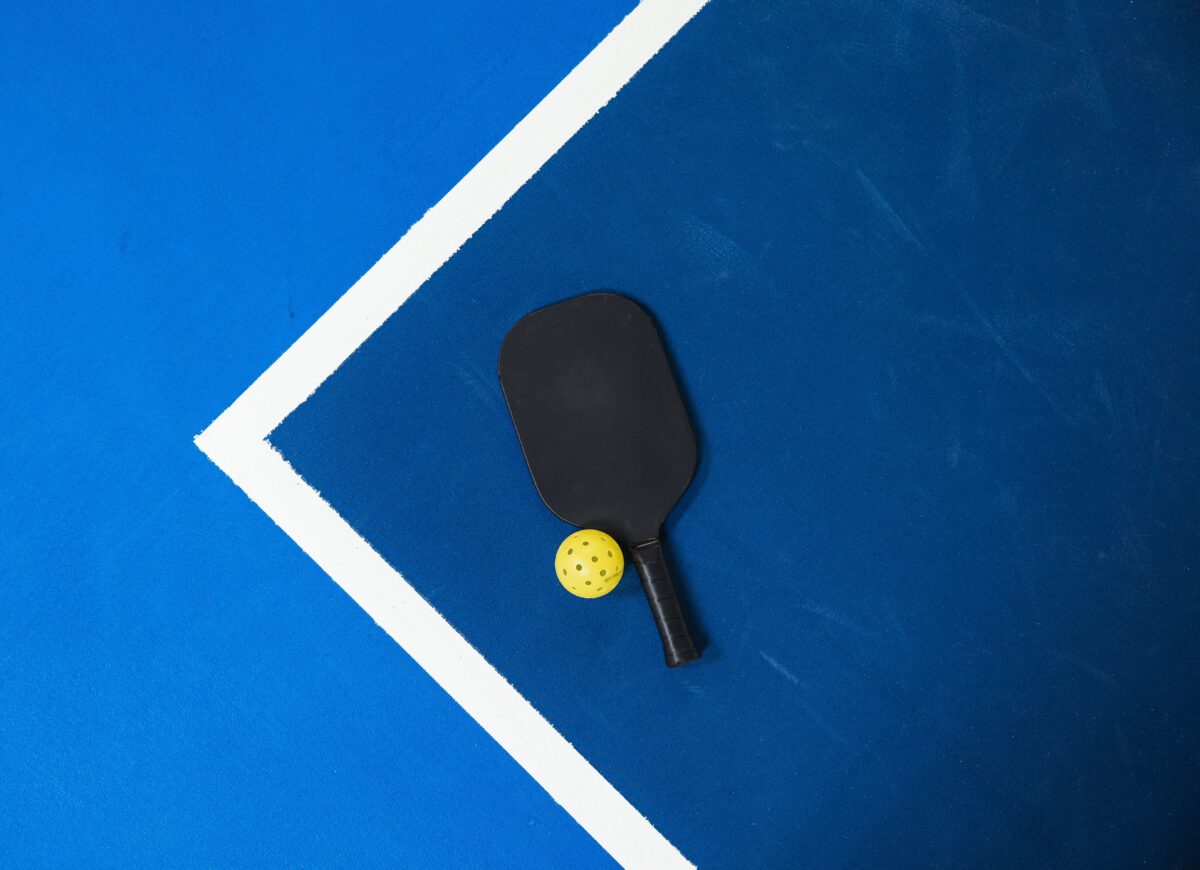
Think of the paddle face as a clock: the top edge is 12 o’clock and the sides are 3 and 9. Photo by Mason Tuttle on Pexels.
Players add weight with thin strips of lead or tungsten tape stuck to the edge guard or the handle. Where you put it matters more than how much:
Small amounts go a long way. Selkirk notes that a 4 x 1/4 inch strip of lead tape weighs about 1 gram, and Pickleball Warehouse says an increase of just 9 grams is noticeable wherever you place it. Our take: add 1 to 2 grams at a time, play a full session, then decide whether to add more. Selkirk’s advice is to stop if a change causes pain and to consult a professional if you are unsure.
Lead tape is the traditional choice, but Pickleball Warehouse notes that lead is considered potentially harmful and carries a California Proposition 65 warning. Tungsten tape is lead-free and denser, so you need less material for the same weight. If your paddle is still under warranty, check the manufacturer’s terms before modifying it.
Our take: most beginners do well with a midweight paddle of about 7.9 to 8.2 oz. It is light enough to react at the net while you learn, and stable enough that mishits do not fly off the face. See our best pickleball paddles for beginners for options.
If you have elbow or shoulder discomfort, weight is worth thinking about: Pickleball Central warns that a paddle that is too heavy can contribute to problems like pickleball elbow, and Selkirk advises stopping any equipment change that causes pain. We are not medical professionals, so if pain persists, talk to a physician or physical therapist before changing paddles or adding weight.
No. USA Pickleball’s rulebook places no restriction on paddle weight or thickness. It limits size instead: the paddle’s length plus width may not exceed 24 inches, and its length may not exceed 17 inches. Most paddles still weigh between about 7.5 and 8.6 oz because that range balances speed and power.
A midweight paddle of about 7.9 to 8.2 oz is a sensible starting point for most beginners, in our editorial view. It is quick enough for net play and stable enough to forgive mishits. Players with arm discomfort may prefer the lighter end, around 7.6 to 7.8 oz.
Not automatically. A heavier paddle (8.3 oz and up) adds power and stability, but it is slower to move into position and can tire the arm; Pickleball Central notes that a paddle that is too heavy may contribute to pickleball elbow. Choose the heaviest paddle you can still swing quickly and comfortably.
Start with 1 to 2 grams and add more only after a full session. Selkirk notes that a 4 x 1/4 inch strip of lead tape weighs about 1 gram, and Pickleball Warehouse says that adding just 9 grams is noticeable. Place tape symmetrically, at 3 and 9 o’clock for stability or at 12 o’clock for power.
At the 3 and 9 o’clock edges to reduce twisting and enlarge the effective sweet spot, at 12 o’clock for more power on drives and serves, or on the handle to make the head feel lighter. Selkirk and Pickleball Warehouse both describe these placements; side placement is the usual starting point.
Swing weight is how heavy a paddle feels when you swing it, which depends on how its weight is distributed, not just its total weight. A head-heavy or longer paddle has a higher swing weight. Independent tester Pickleball Effect measures it on a Briffidi SW1 machine and publishes the results in its paddle database.
About 227 grams, since one ounce is 28.35 grams. Common paddle weights convert as follows: 7.6 oz is about 215 g, 7.9 oz is about 224 g, 8.2 oz is about 232 g and 8.6 oz is about 244 g.
This guide is based on USA Pickleball’s 2025 rulebook, Pickleball Central’s paddle guide, Selkirk’s lead tape guidance, Pickleball Warehouse’s paddle customization guide and Pickleball Effect’s testing method. Paddle weights and prices come from the manufacturer specs and Amazon listings we verified for our pickleball paddle and carbon fiber paddle guides on November 8, 2026. We did not weigh, play-test or customize these paddles for this article; recommendations marked “Our take” are our editorial judgment based on the sources above.