
Kevin Zhang is a passionate table tennis coach and the founder of RecRoomPick.com, a site dedicated to helping players and enthusiasts discover the best in indoor games. With years of competitive ping pong experience, Kevin shares expert tips, equipment reviews, and guides on table tennis, foosball, pool, pickleball, darts, and more. His mission is to make indoor recreation fun, accessible, and competitive for everyone.

 Last updated: November 18, 2026
. Prices were checked on Amazon on this date; ratings and specifications come from the product listings checked for our card shuffler guide. Recroompick earns a commission on qualifying purchases through the links on this page, at no extra cost to you.
Quick answer: Choose a manual card shuffler if you want the cheapest option with no batteries to replace, and an automatic one if you want one-button shuffling, more decks or help for tired hands. A hand-crank model such as the CHH Hand Cranked shuffler costs $18.87 (Amazon, November 18, 2026), takes up to 2 standard or bridge-size decks and has 4.3 out of 5 stars from 5,096 ratings. Battery and rechargeable shufflers cost about $16 to $200; the rechargeable ADZERD lists 65 dB and up to 2,300 decks per charge, and 6-deck models exist for Hand and Foot or blackjack. Our take: buy a crank for occasional 1-2 deck games, and a rechargeable automatic for weekly games or players with sore hands.
Card shufflers come in two basic types. A manual shuffler mixes the cards when you turn a crank; an automatic shuffler does the same job with a motor powered by batteries or a rechargeable cell. Most home shufflers split the deck into two stacks and feed them into one tray.
This guide compares the two on price, power, deck capacity, card sizes, noise and reliability, using the listings and owner feedback we checked for our best card shufflers guide.
| Feature | Manual (hand crank) | Automatic (battery or rechargeable) |
|---|---|---|
| How it works | Turn a handle to feed and mix the cards | Press a button; a motor feeds the two stacks |
| Power | None | 4 AA or 4 C batteries, or a USB-rechargeable battery |
| Decks per load | Up to 2 (CHH Hand Cranked, Baron Barclay) | 1 to 2 on most; up to 6 on 6-deck models |
| Card sizes | Standard (poker) and bridge size on both crank models we checked | Varies: ADZERD lists poker and bridge; Pro Shuffle rejects bridge-size and UNO cards |
| Noise | CHH listing calls it quieter than automatic models | 65 dB listed for ADZERD; FEIERYA owners call theirs loud |
| Price (Nov 18, 2026) | $18.87 (CHH); $19.95 (Baron Barclay) | $15.99 to $199.99; dealer models $139.99 |
| Best for | Occasional games, kids, no batteries | Frequent games, large groups, multi-deck games, hands that tire |
Sources: Amazon listings for the CHH, ADZERD, KPAW, FEIERYA and Pro Shuffle shufflers; Baron Barclay Bridge Supply product page. Prices change often.
A manual card shuffler is a hand-cranked box: you load the cards, turn the handle and the mixed cards collect in a tray. It needs no batteries or charging.
The design is old. Wikipedia’s history of shuffling machines notes that most early machines were “manually run by turning a crank which would activate the inner gears and rollers”, and that a 1932 machine by Laurens Hammond was one of the first to use electricity to shuffle and deal.
The CHH Hand Cranked Card Shuffler takes up to 2 decks of standard or bridge-size cards and costs $18.87. Its listing describes it as quieter than automatic models. On Amazon it has 4.3 out of 5 stars from 5,096 ratings (checked November 14, 2026); owners call it good value and fun for kids, and some report durability problems. Baron Barclay Bridge Supply sells a similar 2-deck crank model for $19.95 and claims that automatic shufflers “require batteries, break, and jam often”. That is a seller’s claim, not a measured result.
One naming trap: some electric shufflers, such as the KPAW X1, advertise a “manual mode”. That is a press-and-hold mode on a motorized machine, not a hand crank.
An automatic card shuffler uses a small motor to pull cards from two stacks into one tray at the press of a button. Older and cheaper models run on disposable batteries; newer ones charge over USB.
| Automatic model | Power | Decks | Rating (Nov 14, 2026) | Price (Nov 18, 2026) |
|---|---|---|---|---|
| ADZERD rechargeable | USB-C, 1,200 mAh; up to 2,300 decks per charge | Up to 2 | 4.6 (1,139) | $29.99 |
| KPAW X1 | Rechargeable | 1 to 2 | 4.5 (1,810) | $31.99 |
| FEIERYA 2-deck | 4 AA (not included) | 1 to 2 | 4.1 (8,633) | $15.99 |
| CHH 6-Deck | 4 C (not included) | Up to 6 | 4.0 (2,062) | $29.99 |
| Pro Shuffle 1-6 deck | Owners say it works with or without batteries | 1 to 6 | 4.3 (282) | $199.99 |
| KPAW MAX 6 shuffler and dealer | Rechargeable; up to 150 decks per charge | 1 to 2; deals to up to 12 players | 4.4 (598) | $139.99 |
Sources: Amazon listings and Amazon’s “Customers say” summaries, checked for our card shuffler guide; prices via the Amazon Creators API on November 18, 2026.
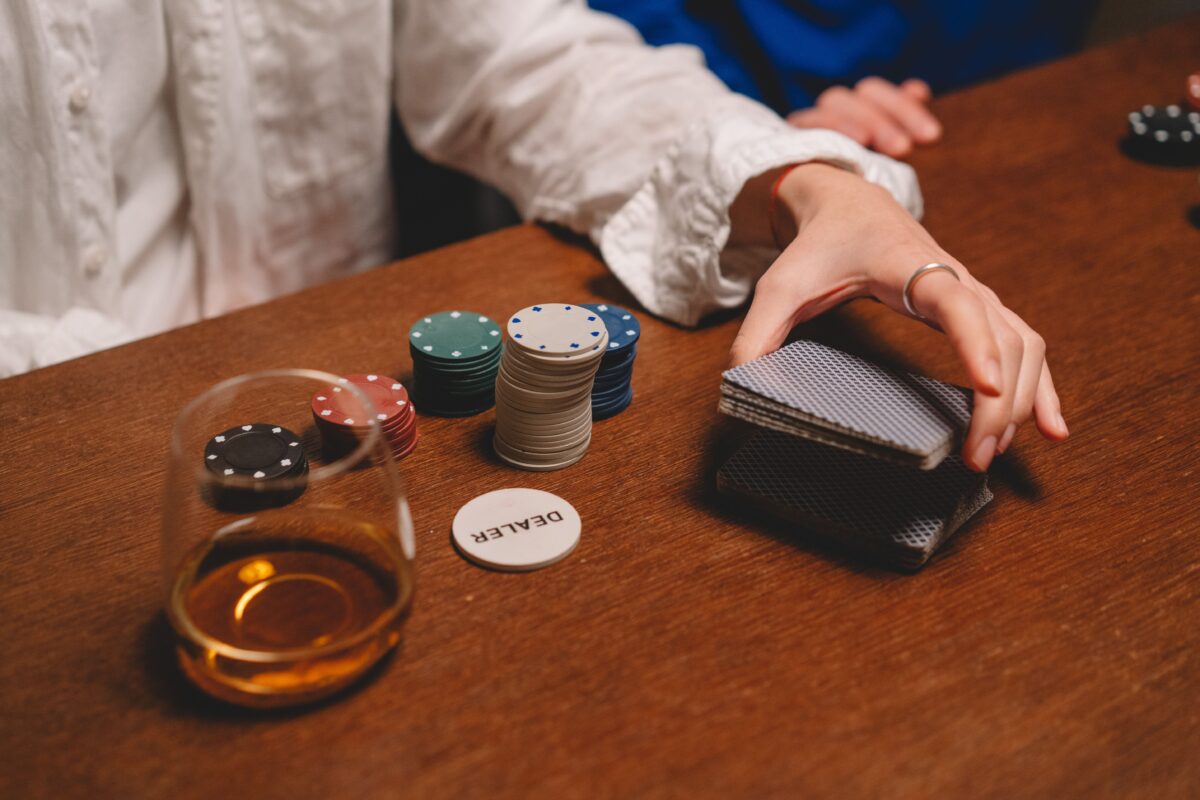
Both types do the same job; the difference is a hand crank or a motor. Photo by cottonbro studio on Pexels.
Neither type is trouble-free, according to owner reviews. Jams and uneven feeding are the most common complaints about cheap automatic models: Amazon’s summary of FEIERYA reviews counts about 1,200 mentions of cards getting stuck, and CHH 6-Deck owners are split on whether it works properly. The rechargeable ADZERD gets better feedback; owners say it shuffles thoroughly without jamming. Crank models avoid dead batteries, but CHH Hand Cranked owners still raise durability concerns.
Our take: the quality of the individual model matters more than the type. Check the rating count and recent reviews before buying either kind.
A hand-crank shuffler is the quietest option, because there is no motor; the CHH Hand Cranked listing calls it quieter than automatic shufflers. Among automatic models, the ADZERD rechargeable is the only one in our guide with a published noise figure: 65 dB. For comparison, the CDC’s National Institute for Occupational Safety and Health (NIOSH) says that at 85 dBA you likely have to raise your voice to be heard by someone 3 feet away. KPAW describes the X1 as low noise but gives no number. FEIERYA owners describe their battery model as fast but loud.
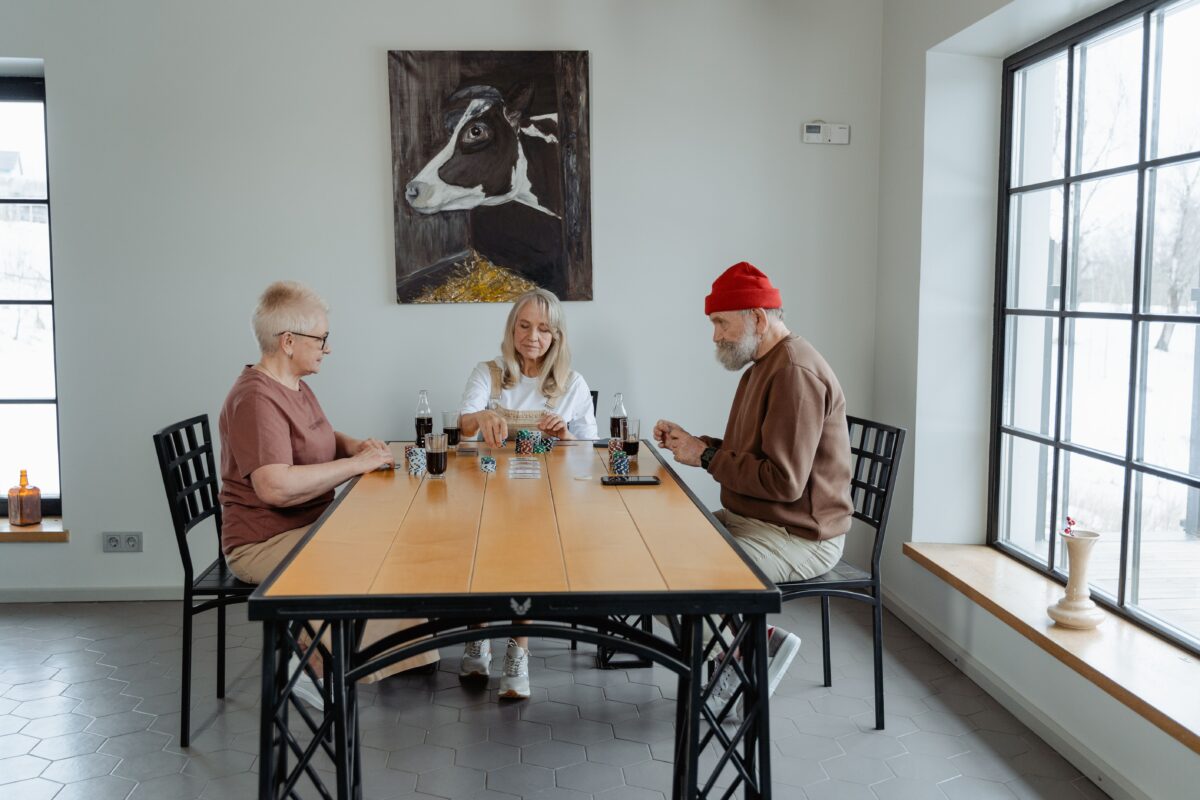
Regular card nights are where a one-button shuffler saves the most time. Photo by MART PRODUCTION on Pexels.
Compare all seven picks in our best card shufflers guide. For specific games, see which card shufflers work with UNO cards, and for how well machines mix a deck, see are card shufflers random?
They are worth it if you play often or find shuffling hard. A rechargeable model such as the ADZERD costs $29.99 (November 18, 2026) and lists up to 2,300 decks per charge. For occasional games, a hand-crank shuffler at about $19 does the same job without batteries. Cheap battery models draw frequent complaints about jams.
Neither is better for everyone. A manual shuffler is cheaper, needs no power and is quieter, but you have to turn the crank and it holds only 2 decks on the models we checked. An automatic shuffler works with one button and is available in 6-deck and dealer versions, at a higher price.
No. A manual card shuffler is powered by turning a hand crank. Be careful with listings that mention a “manual mode”: on electric shufflers such as the KPAW X1, that is a press-and-hold setting on a motorized machine that still needs a charged battery.
Hand-crank shufflers are the quietest because they have no motor; the CHH Hand Cranked listing calls its model quieter than automatic ones. The ADZERD rechargeable is the only automatic model in our guide with a published noise level, 65 dB. Owners describe the FEIERYA battery model as loud.
Many can, but check the listing. The CHH Hand Cranked shuffler, the Baron Barclay manual shuffler and the ADZERD rechargeable all list bridge-size cards. The Pro Shuffle listing says it will not shuffle bridge-size cards, UNO, 5 Crowns or Skip-Bo.
Most home shufflers, manual or automatic, take 1 to 2 decks per load. The CHH 6-Deck and Pro Shuffle models take up to 6 decks, which suits Hand and Foot or blackjack. For larger games you can also shuffle in batches and combine the stacks.
This comparison is based on the Amazon listings, ratings and Amazon “Customers say” summaries checked on November 14, 2026 for our card shuffler guide, prices rechecked through the Amazon Creators API on November 18, 2026, the Baron Barclay Bridge Supply product page, Wikipedia’s history of shuffling machines and the CDC NIOSH noise guidance. Owner feedback is summarized, not quoted as test results. Recommendations marked “Our take” are our editorial judgment.