 Last updated: November 23, 2026
. Prices and specs were checked on the makers’ own websites on this date. Recroompick earns a commission on qualifying purchases through some links on this site, at no extra cost to you.
Quick answer: Most automatic card shufflers do not work reliably with sleeved cards, because their feed slots are sized for unsleeved poker-size cards. The maker of the Lotus shuffler ($89) says it does not recommend its machine for sleeved decks. Shufflers built for sleeves are mostly hand-cranked: Urza’s Toolbox, a Raleigh, North Carolina maker, sells 3D-printed models from $99.99 to $189.99 that hold 60 to 200 single-sleeved cards, and its $129.99 Standard size holds about 100 single-sleeved cards, a full Commander deck (prices checked November 23, 2026). In our editorial view, a mash shuffle by hand is still the cheapest option for one or two sleeved decks; a sleeve-specific crank shuffler makes sense if you shuffle 100-card decks often.
Card sleeves protect trading cards, but they make cards thicker, wider and slippery, which is why the battery shufflers sold for poker and family card games jam or refuse sleeved decks. Players of Magic: The Gathering, Pokémon and sleeved board games therefore ask whether any shuffler works with sleeves.
This guide explains why sleeves cause problems, compares the sleeve-specific shufflers by capacity and price from the makers’ published specs, and covers how to shuffle sleeved decks by hand, including 100-card Commander decks and what tournament rules require.
| Option | Price (Nov 23) | Sleeved capacity | Power | Good for |
|---|---|---|---|---|
| Lotus Card Shuffler V2 | $89.00 | Not recommended for sleeves (2 unsleeved poker decks, 104 cards) | 9V battery | Unsleeved card games |
| Urza’s Toolbox Mini | $99.99 | 60 single-sleeved / 120 unsleeved | Hand crank | 60-card constructed decks |
| Urza’s Toolbox Standard | $129.99 | 100 single-sleeved / 200 unsleeved | Hand crank | Single-sleeved Commander decks |
| Urza’s Toolbox XL | $149.99 | 100 double / 125 single / 250 unsleeved | Hand crank | Double-sleeved Commander decks |
| Urza’s Toolbox XXL | $169.99 | 125 double / 150 single / 300 unsleeved | Hand crank | Large decks |
| Urza’s Toolbox Super200 | $189.99 | 175 double / 200 single / 400 unsleeved | Hand crank | Very large or triple-sleeved decks (with an add-on) |
| Mash shuffle by hand | Free | Any deck you can hold | None | One or two decks a session |
Sources: play-lotus.com and urzastoolbox.com product pages, checked November 23, 2026. Capacities are the makers’ figures.
Most do not work reliably. Home card shufflers are built around the size of an unsleeved playing card, and a sleeve adds width and thickness. Lotus, which sells a battery shuffler for $89, answers the question on its own site with “Not reliably, and we do not recommend buying a Lotus for a sleeved deck,” and explains that most sleeves push the deck outside a feed channel sized for unsleeved poker-size cards.
The same applies to the battery and hand-cranked shufflers in our best card shufflers guide: none lists sleeved cards in its specs, so treat them as tools for unsleeved poker, rummy and family card games. For card sizes those machines do take, see can a card shuffler shuffle UNO cards.
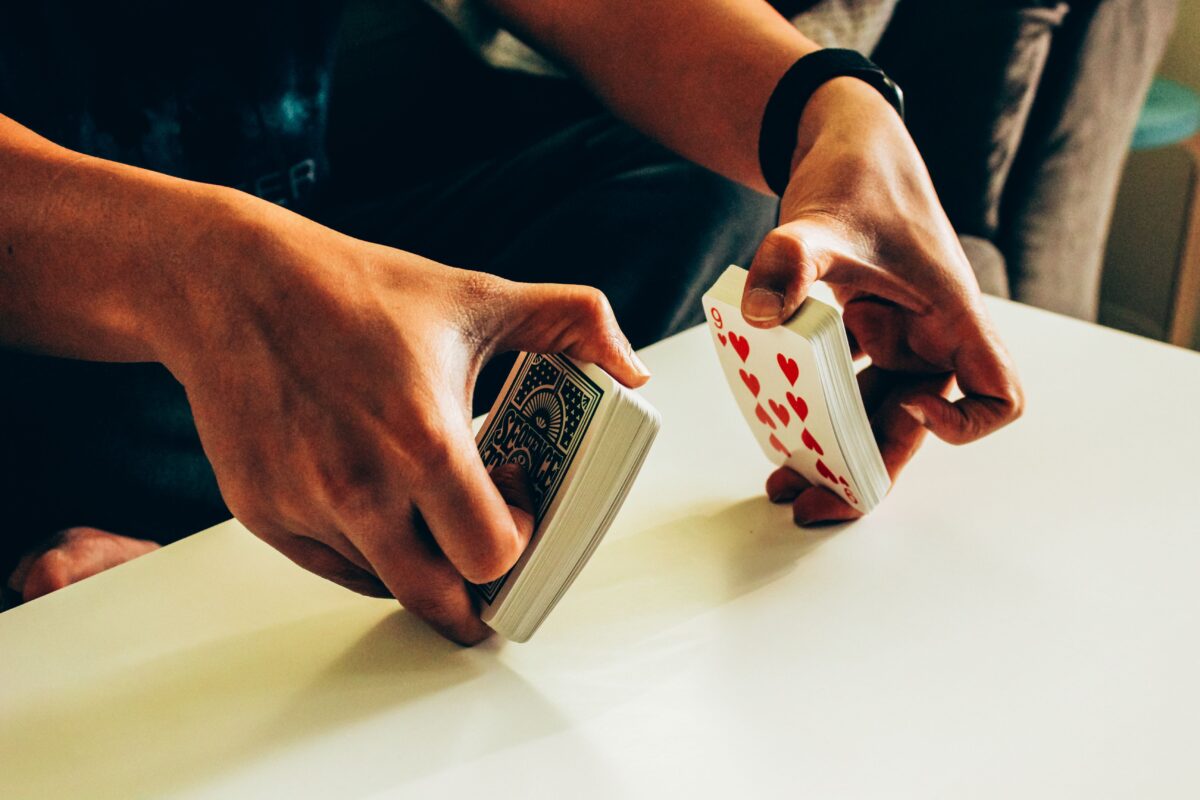
Home shufflers are built for unsleeved playing cards like these. Photo by Prathyusha Mettupalle on Pexels.
Sleeve-specific shufflers are a small niche, mostly hand-cranked and made in small batches. Urza’s Toolbox in Raleigh, North Carolina, describes its Sleeved Shuffler as “a card shuffler designed for sleeved cards and unsleeved cards alike.” Every model is 3D-printed, hand-assembled and hand-cranked, with no motor or battery.
Marketplaces such as Etsy also sell 3D-printed hand-crank shufflers advertised for sleeved cards. Their specs vary by seller, so check the stated sleeved capacity and the sleeve brands the seller has tried before you buy.
The mash shuffle is the usual way to shuffle a sleeved deck by hand: split the deck into two halves, hold them end to end, and push one half into the other so the cards interleave, then repeat several times. Sleeves slide past each other, so the halves mix without bending the cards.
How many shuffles are enough depends on the method; our guide to how many times you should shuffle a deck explains the math for riffle shuffles.
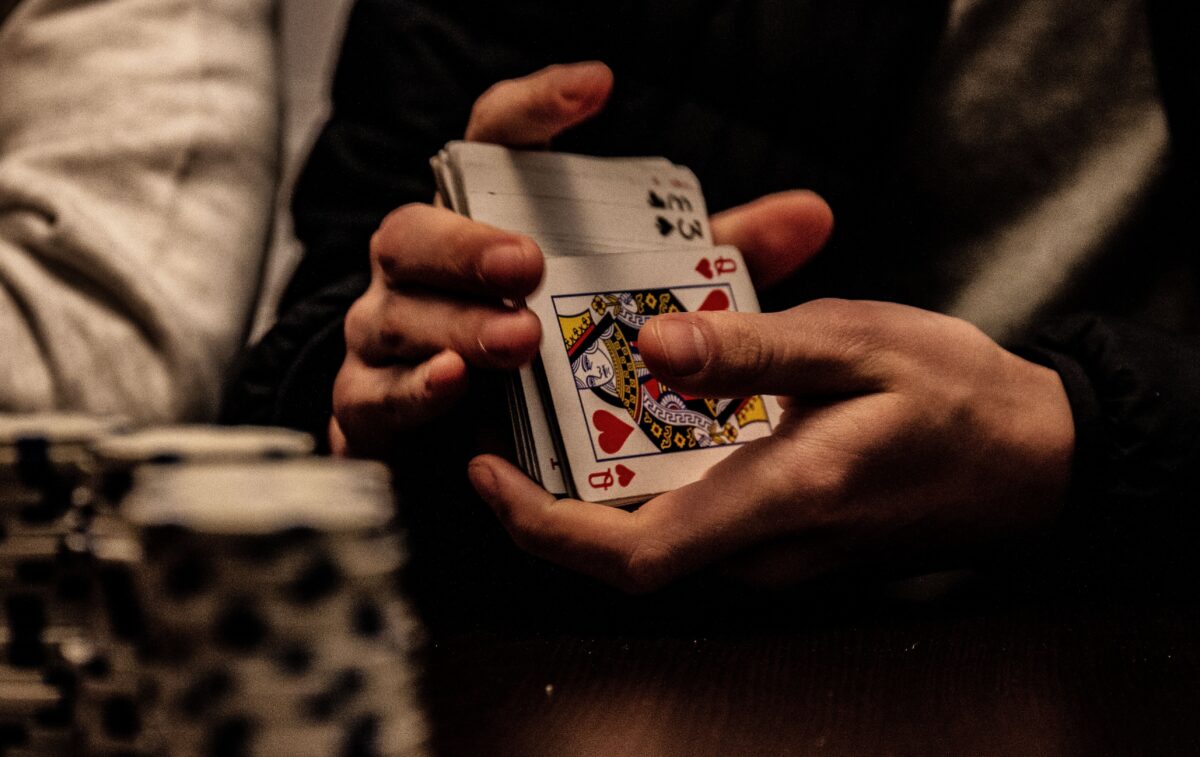
Hand shuffling remains the cheapest option for sleeved decks. Photo by Marin Tulard on Pexels.
A Commander deck must contain exactly 100 cards, including the commander, under the official Commander rules. A 100-card sleeved deck is thick to mash shuffle in one go, so many players split it into three or four stacks, mash shuffle each stack, then mash the stacks together and repeat.
For a shuffler, capacity is the key spec: a 100-card single-sleeved deck needs a model rated for at least 100 sleeved cards, such as the Urza’s Toolbox Standard, and a double-sleeved deck needs the XL or larger. The Mini (60 single-sleeved cards) fits a 60-card constructed deck; the Magic Comprehensive Rules set 60 cards as the minimum size of a constructed deck.
The Magic Tournament Rules (section 3.10, Card Shuffling) require that decks be randomized at the start of every game and whenever an instruction requires it. They define randomization as bringing the deck to a state where no player can have any information about the order or position of cards, and they add that “Cards and sleeves must not be in danger of being damaged during this process.” The Comprehensive Rules (rule 103.3) also let each player shuffle or cut an opponent’s deck before the game.
The section does not mention mechanical shufflers. At casual Commander tables a shuffler is a convenience; at a sanctioned event, ask the organizer or a judge before using one, and expect your opponent to shuffle or cut the deck as usual.
Our take: if you play one or two sleeved decks a session, a mash shuffle by hand costs nothing and is gentle on sleeves. A sleeve-specific crank shuffler is worth $100 to $150 if you shuffle 100-card Commander decks many times a night, find hand shuffling tiring, or want help shuffling because of hand or wrist limits.
Most do not work reliably. Standard battery and hand-crank shufflers are sized for unsleeved playing cards, and the maker of the $89 Lotus shuffler says it does not recommend its machine for sleeved decks. Shufflers designed for sleeves, such as the Urza’s Toolbox hand-crank models, list sleeved capacities from 60 to 200 cards.
A mash shuffle is the usual method: split the deck, push the two halves into each other and repeat several times. It is quick and does not bend cards. Pile shuffling can follow to separate clumps, but the Magic Tournament Rules say pile shuffling alone is not sufficiently random.
Yes, a few small makers build shufflers for sleeved Magic decks. Urza’s Toolbox sells hand-cranked models from $99.99 for 60 single-sleeved cards to $189.99 for 200 single-sleeved cards, and says its $129.99 Standard size is built for a single-sleeved 100-card Commander deck (prices checked November 23, 2026).
Split the 100 cards into three or four smaller stacks, mash shuffle each stack, then combine and mash the stacks together, and repeat. A sleeved shuffler needs a capacity of at least 100 sleeved cards; double-sleeved decks need a larger model, such as the Urza’s Toolbox XL rated for 100 double-sleeved cards.
The Magic Tournament Rules section on card shuffling does not mention mechanical shufflers. It requires a fully randomized deck, no risk of damage to cards or sleeves, and the Comprehensive Rules let the opponent shuffle or cut your deck. Ask the event organizer or a judge before using a shuffler at a sanctioned event.
They can if the cards do not fit. Sleeved cards that are too wide for the feed slot jam, which is why makers like Lotus advise against sleeved decks. Urza’s Toolbox states it has never had a sleeved card damaged in its shufflers; that is the maker’s claim, not an independent test.
This guide is based on the product pages and FAQs of Lotus and Urza’s Toolbox, the Magic Tournament Rules, the Magic: The Gathering Comprehensive Rules and the official Commander rules, all checked on November 23, 2026. The comparison with home shufflers uses the specs we verified for our best card shufflers guide. Capacities and damage claims are the makers’ own figures. Recommendations marked “Our take” are our editorial judgment based on the facts above.